Hawkes Architecture

What are you looking for?

Albury Hall, a Para 80, energy efficient passive house. Another grand design by Hawkes Architecture.

Paragraph 84 (Para 84)

Albury Hall

Set within a patchwork of woodland copses, the walled garden of a once grand country house remains — rediscovered with our Paragraph 84 home.

New Build

A contemporary home rooted in historic walls

Set within the remnants of a historic walled garden at Albury Hall, this Paragraph 84 (Para 84) home explores the sense of belonging. Approved by East Herts District Council in October 2023, the design responds to a unique site divided into three linear spaces by original perimeter walls. At ground level, spaces are organised in as linear sequence with their own distinct character and purpose, while above the architecture breaks free — embracing curved forms that contrast the formal boundaries below. The result is a bold yet highly considered home, tailored to the lives of its ambitious occupants and prioritizing insulation, openness, and energy efficiency.

Interior Atmosphere

Light Above, Connection Below

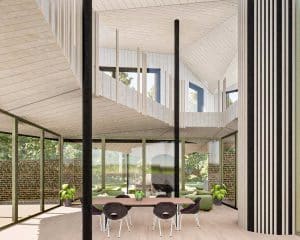
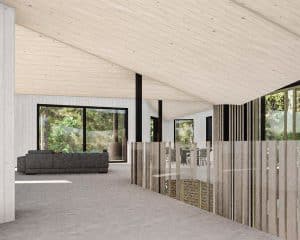
On the ground floor, the architecture is shaped by the existing brick garden walls. You’re always aware of being enclosed — the walls define the furthest you can see. It’s not a conventional domestic space, but rather a quiet, dark pavilion that feels embedded within the historic walled garden. The atmosphere is one of containment and intimacy, with a strong emphasis on looking outward — on flowing between, and connecting to, the surrounding garden spaces. As you move upstairs, that sense of containment begins to shift. Here, you’re held more by the architecture itself than by the garden walls. Framed views open up to the treetops, and the sense of enclosure gives way to one of elevation and outlook. From this level, you gain a secondary perspective, looking back down into the garden below.

Dining room at Albury Hall, a Para 80, energy efficient passive house. Another grand design by Hawkes Architecture.

On the ground floor, the architecture is shaped by the existing brick garden walls. You’re always aware of being enclosed — the walls define the furthest you can see. It’s not a conventional domestic space, but rather a quiet, dark pavilion that feels embedded within the historic walled garden. The atmosphere is one of containment and intimacy, with a strong emphasis on looking outward — on flowing between, and connecting to, the surrounding garden spaces. As you move upstairs, that sense of containment begins to shift. Here, you’re held more by the architecture itself than by the garden walls. Framed views open up to the treetops, and the sense of enclosure gives way to one of elevation and outlook. From this level, you gain a secondary perspective, looking back down into the garden below.

Design Narrative

The language of Albury Hall

The architectural concept takes its cues from the traditional layout and atmosphere of walled gardens, responding to the geometry of the existing walls.


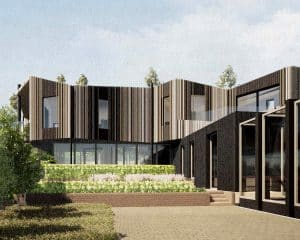
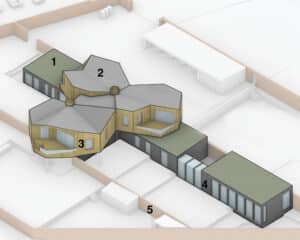
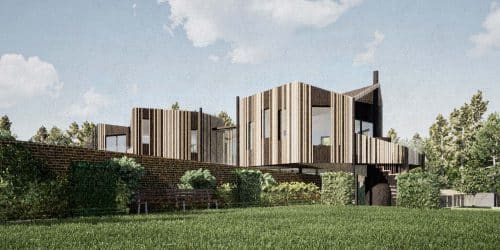
The building’s design is directly shaped by its context. At ground level, the plan responds to the formal geometry of the existing walled garden, echoing its structure and linearity . The first floor, by contrast, rises above the brick enclosure and is freed from those formal constraints. Its plan is more organic — responsive to distant views and natural light — creating a branching form that gestures outward, like a tree growing beyond its boundary. A central double-height void connects the two levels, allowing light to travel throughout the internal spaces.
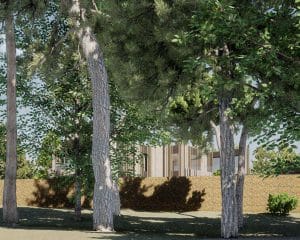
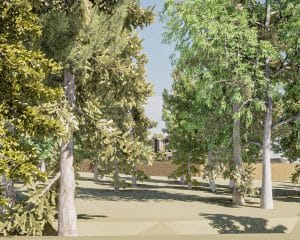
A thick tree canopy reinforces the walled boundary, creating a natural screen that separates it from the wider landscape. Though discreetly positioned, the site is not entirely hidden. A nearby public footpath offers carefully filtered views through gaps in the foliage—revealing hints of a contemporary intervention within.

Albury Hall. This Paragraph 84 (Para 80) project is unusual in being divided into three linear “rooms” contained by its perimeter wall. By Hawkes Architecture Ltd.

The architectural concept takes its cues from the traditional layout and atmosphere of walled gardens, responding to the geometry of the existing walls.


The building’s design is directly shaped by its context. At ground level, the plan responds to the formal geometry of the existing walled garden, echoing its structure and linearity . The first floor, by contrast, rises above the brick enclosure and is freed from those formal constraints. Its plan is more organic — responsive to distant views and natural light — creating a branching form that gestures outward, like a tree growing beyond its boundary. A central double-height void connects the two levels, allowing light to travel throughout the internal spaces.
A thick tree canopy reinforces the walled boundary, creating a natural screen that separates it from the wider landscape. Though discreetly positioned, the site is not entirely hidden. A nearby public footpath offers carefully filtered views through gaps in the foliage—revealing hints of a contemporary intervention within.

Terrain and Place

Innovation Meets Heritage in a Secluded Setting

Defined the garden’s brick walls, the site retains a strong sense of enclosure that frames both its historic significance and future potential.


Albury Hall, built circa 1780, stood as a significant country house that replaced an earlier manor on the estate. During the Second World War, the hall was occupied by the Army Eastern Command and partly by the Special Operations Executive (SOE). This period of intense military use left its mark—culminating in a devastating fire that led to the building’s eventual demolition in 1950.
Despite the loss of the main house, the surrounding designed landscape—and in particular, the walled kitchen garden—remains remarkably intact. A detailed analysis of historic maps reveals minimal alteration to the garden’s structure and layout since its first recorded depiction in the late 18th century.

Today, the kitchen garden retains its formal arrangement of bays, however much of the space is now overgrown. This quiet erosion adds to the atmospheric quality of the site, offering a rare and compelling opportunity to engage with a landscape steeped in history yet open to contemporary interpretation.

Albury Hall. This Paragraph 84 (Para 80) project is unusual in being divided into three linear “rooms” contained by its perimeter wall. By Hawkes Architecture Ltd.

Defined the garden’s brick walls, the site retains a strong sense of enclosure that frames both its historic significance and future potential.


Albury Hall, built circa 1780, stood as a significant country house that replaced an earlier manor on the estate. During the Second World War, the hall was occupied by the Army Eastern Command and partly by the Special Operations Executive (SOE). This period of intense military use left its mark—culminating in a devastating fire that led to the building’s eventual demolition in 1950.
Despite the loss of the main house, the surrounding designed landscape—and in particular, the walled kitchen garden—remains remarkably intact. A detailed analysis of historic maps reveals minimal alteration to the garden’s structure and layout since its first recorded depiction in the late 18th century.

Today, the kitchen garden retains its formal arrangement of bays, however much of the space is now overgrown. This quiet erosion adds to the atmospheric quality of the site, offering a rare and compelling opportunity to engage with a landscape steeped in history yet open to contemporary interpretation.

Historic Section

This drawing below illustrates the site when it was historically in use.

Historic detailing

Preservation and restoration

The existing garden wall reveals moments of historic charm—weathered brickwork, aged textures, and original timber gateways that speak to the site’s past. While some areas require sensitive repair, the scheme thoughtfully incorporates their preservation and restoration into the overall design approach. A long-dormant historic pond within the garden is also set to be carefully reinstated, reintroducing a lost landscape feature and enhancing the site’s ecological and visual character.

Texture and language

Material Palette

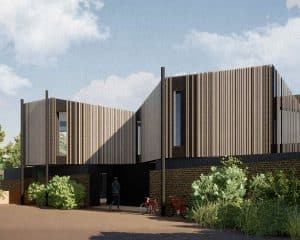
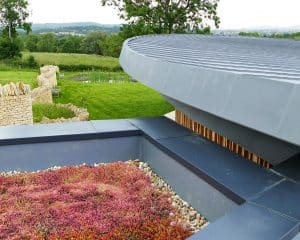
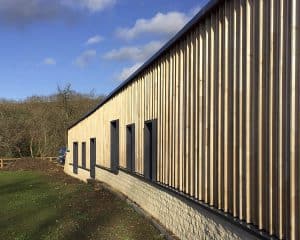
Architecture and materiality are different below and above the garden walls, to respect the existing heritage. The chosen material palette reflects the built typologies you would expect to see within a walled garden: metal, glass, and brickwork. Above the wall, the chosen material is a double layered timber cladding. Both light and dark timber have been chosen in contrasting tones of light and dark to create a fringed and frayed edge. A biodiverse sedum roof allows the architecture to blend seamlessly into its landscaped surroundings, while also enhancing biodiversity and reducing visual impact from above. This also encourages Small Cudweed, a rare country plant.

Albury Hall. This Paragraph 84 (Para 80) project is unusual in being divided into three linear “rooms” contained by its perimeter wall. By Hawkes Architecture Ltd.

Architecture and materiality are different below and above the garden walls, to respect the existing heritage. The chosen material palette reflects the built typologies you would expect to see within a walled garden: metal, glass, and brickwork. Above the wall, the chosen material is a double layered timber cladding. Both light and dark timber have been chosen in contrasting tones of light and dark to create a fringed and frayed edge. A biodiverse sedum roof allows the architecture to blend seamlessly into its landscaped surroundings, while also enhancing biodiversity and reducing visual impact from above. This also encourages Small Cudweed, a rare country plant.

Albury Hall’s design works very hard to provide carefully considered relationships between each space for its busy and ambitious occupants.

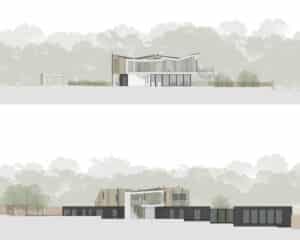
Cross Sections

Cross section of Albury Hall, a Para 80, energy efficient passive house. Another grand design by Hawkes Architecture.

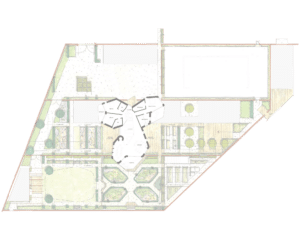
Site Plan

Albury Hall. This Paragraph 84 (Para 80) project is unusual in being divided into three linear “rooms” contained by its perimeter wall. By Hawkes Architecture Ltd.

Tech

House Performance

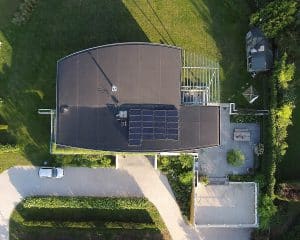
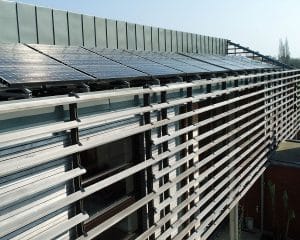
Thanks to the slope of the site falling toward the south, each garden space benefits from excellent sunlight throughout the day. This orientation not only enhances natural light but also creates a series of warm microclimates—ideal for outdoor living and for growing sun-loving fruits and vegetables along the south-facing walls. Biodiversity, energy efficiency, and sustainable innovation are central to the client’s values. This project reflects that commitment, integrating forward-thinking technologies that align with a long-term vision for low-impact living and responsible development. A combination of solar photovoltaic panels and solar thermal systems provides a highly efficient, renewable solution for powering and heating the home. This energy strategy is inspired by the site’s horticultural past—reinterpreting the walled garden’s historic role in capturing and retaining warmth to support growth, now reimagined for a modern, sustainable future.

Albury Hall. This Paragraph 84 (Para 80) project is unusual in being divided into three linear “rooms” contained by its perimeter wall. By Hawkes Architecture Ltd.

Thanks to the slope of the site falling toward the south, each garden space benefits from excellent sunlight throughout the day. This orientation not only enhances natural light but also creates a series of warm microclimates—ideal for outdoor living and for growing sun-loving fruits and vegetables along the south-facing walls. Biodiversity, energy efficiency, and sustainable innovation are central to the client’s values. This project reflects that commitment, integrating forward-thinking technologies that align with a long-term vision for low-impact living and responsible development. A combination of solar photovoltaic panels and solar thermal systems provides a highly efficient, renewable solution for powering and heating the home. This energy strategy is inspired by the site’s horticultural past—reinterpreting the walled garden’s historic role in capturing and retaining warmth to support growth, now reimagined for a modern, sustainable future.