New Build
Woodland Living
Set deep within a rewilded former WW2 camp, Grove Farm Woods is a new Paragraph 84 (Para 84). house designed to blend seamlessly into its secluded woodland setting. Drawing inspiration from the site’s historic linear tracks, remnants of lost barns, and concrete pads, the design establishes a clear hierarchy of thresholds, gradually leading visitors from public access to a private sanctuary at the heart of the site. Developed as a sustainable lifetime home, the scheme was shaped through close collaboration with Buckingham Council and received planning permission on Christmas Eve 2024, with strong support from the Design Review Panel for its sensitive and site-specific approach.
The History
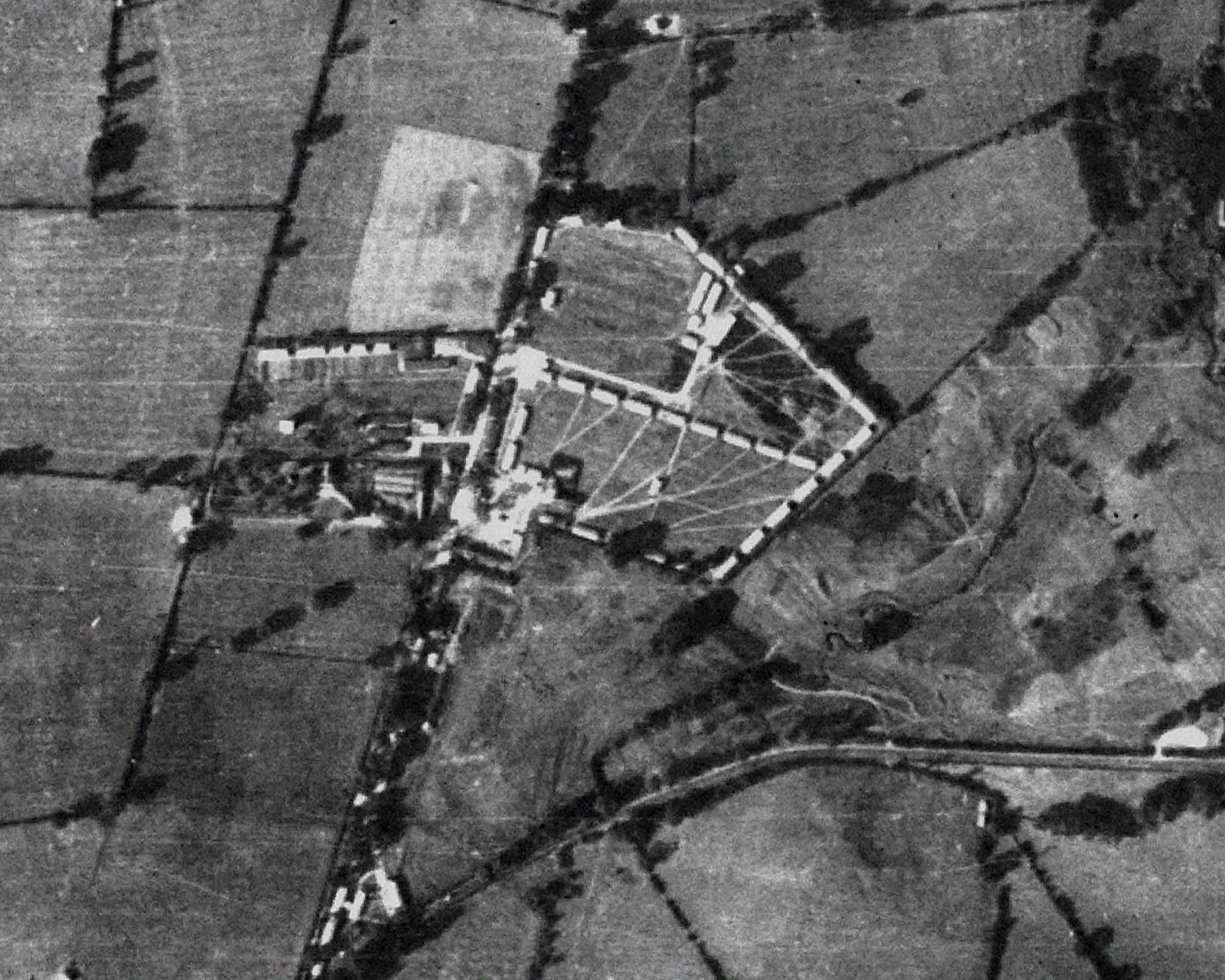
Grove Farm Woods sits on the site of a former WWII military camp, once supporting nearby Tingewick Airfield. In 1945, the land looked dramatically different—devoid of trees, with regimented rows of Nissen huts and hardstanding pads laid out along existing hedge lines. Remnants of these structures, including concrete foundations and a surviving outbuilding to the north, remain embedded in the landscape today. These traces of wartime infrastructure have directly informed the new dwelling’s layout, siting, and architectural language. As a response, the material palette is drawn from both the local vernacular, such as limestone rubble, slate and gault brick, and from the industrial palette of the former camp, including corrugated metal and concrete. The house becomes both a home and a quiet tribute to the site’s layered past.
Floor Plan